When FCCMA staff gently reminded me to finish these remarks, the deadline coincided with the ICMA Local Government Re-imagined Conference in Philadelphia. The topic this year? Democracy and the Public Trust. And so, on the eve of our nation’s 250th anniversary, I found myself in Philadelphia—the very cradle of our founding—thinking about each of you.
Last year, when I spoke to you from this stage, we talked about our camera rolls. We talked about how city leaders view the world through a slightly unusual lens. We discussed Florida’s role in the world economy, and how we must reach beyond our state borders for ideas, solutions, and best practices. And finally, we talked about joy—the importance of serving, despite our challenges, with a heart full of joy.
This past year at FCCMA has been a stable and successful one. We remain fiscally strong with a vibrant membership base. We continued our robust slate of professional development, bringing in expert speakers from within and outside Florida for our monthly webinars, and keynote speakers from Texas and New Mexico to this very conference. We reached our 218th podcast episode. We refined and improved the function of our Ethics Policy. We hosted the largest-ever ICMA International Conference in Tampa. And, with every trip to Tallahassee, we spoke truth to power—clearly demonstrating that our budgets are transparent, balanced, and precisely tailored to the residents who chose them.
Reflecting on all of this, I was reminded of “The Science of ‘Muddling Through,'” Charles Lindblom’s landmark 1959 paper on how administrators make decisions in the face of deep uncertainty. We use what we have. We draw from experience, weigh the choices available to us in the moment, and navigate the context of the situation to put one foot in front of the other. We muddle through.
So, there I was in Philadelphia, out for an early morning walk. At the corner of 4th and Chestnut, I came face-to-face with a grave. It startled me; I wasn’t expecting it right there in the middle of the city—a name carved simply into a marble slab: Benjamin Franklin.
I’ve read H.W. Brands’ biography of Franklin. I have a solid understanding of his contributions to science, innovation, the fire service, insurance, and the founding of our republic. Yet, I was entirely unprepared for how deeply I would be moved by the words of his contemporaries at the time of his death—words from Washington, Mirabeau, and Turgot. It made me stop and ask: What is the legacy that each of us will leave behind?
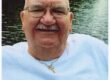
My friend Chuck Pavlos, a retired Navy Commander, worked in local government for years, serving communities in Cape Coral, Orange Park, and Punta Gorda. We worked together nearly every day for eight years before he retired. After battling bone cancer for several years, he called me. Many others in this room received a similar call that day. He called on the very last day of his life to say, “I’m done fighting. Thank you, and I love you.”
I had no words in that moment. Overcome by emotion, I fumbled through a response of sorrow and condolences.
Since then, I have often thought about what I wish I had said. I should have said: “You did it, Chuck. You built a magnificent legacy—a dedication to your faith, and a beautiful family of a wife, sons, and grandsons. You served your country with honor. You served your communities well, building infrastructure to improve water and sewer systems and protecting homes and businesses from rising waters. You did it all with generosity and love. You can rest easy knowing you made a difference to so many people. You and your family are surrounded by love.”
So, returning from the City of Brotherly Love, my hope for each of us as we muddle through is that we truly love the work and that we love the people we work with.
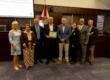
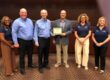
Speaking of love for our organization, I want to extend a massive thank you to everyone who volunteered on an FCCMA committee, our Senior Advisors, the FCCMA Board of Directors, and our dedicated FCCMA staff. Please join me in recognizing the incredible work of these groups on behalf of our association.
I’d like to leave you with a quote from 1907 by the famed Chicago architect, Daniel Burnham: “Make no little plans; they have no magic to stir men’s blood, and probably themselves will not be realized. Make big plans; aim high in hope and work, remembering that a noble, logical diagram once recorded will never die, but long after we are gone will be a living thing, asserting itself with ever-growing insistency. Remember that our children and grandchildren are going to do things that would stagger us.”
Sincerely,
Sarah