By Mr. Kelvin L. Baker, Sr. – ICMA-CM, Deputy City Manager, City of Miramar
MIRAMAR, Fla. — Local governments are balancing rising service demands with constrained revenues. In response, the City of Miramar launched the Comprehensive Assessment of Revenues and Expenses (C.A.R.E.) Program in 2018 – a structured, 10-point, data-driven framework to improve financial performance while maintaining service levels.
The C.A.R.E. Program, led by the city manager’s office, is emerging as a best-practice model for local governments seeking to maximize resources while maintaining high-quality public services. Through this program, the city has received millions of dollars in revenue from revenue-enhancement opportunities, grants, and energy-conservation initiatives, while empowering employees to drive innovation and best management practices.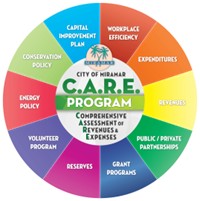
At its core, the C.A.R.E. Program establishes a framework for sound financial management and responsible, cost-effective use of public funds. It is designed to maximize all resources, including city assets and facilities. Each of the 10 focus areas is guided by a committee with designated leadership, ensuring accountability and coordinated implementation across departments. The initiative reflects the city’s mission to enhance the quality of life while fostering a clean, safe, and economically viable community.
Revenue generation is the cornerstone of the program. The Revenue Committee identifies opportunities to generate recurring and non-recurring revenue, strengthening the city’s financial position. Its ongoing efforts continue to uncover new funding streams without raising tax rates.
A key pillar of the program is workplace efficiency. Recognizing that an empowered workforce drives municipal success, the Workplace Efficiency Committee is developing strategies to improve productivity, morale, and professional development. Central to this effort is the creation of the City of Miramar Training Academy, which will provide structured learning opportunities and support continuous employee growth. By investing in its workforce, the city reinforces its vision of being “a vibrant, active, and progressive community fueled by an empowered workforce.”
The Expenditures Committee addresses the challenge of declining ad valorem tax revenues. Through a review of current and past spending, the committee aims to reduce costs while maximizing value. Its focus on contract evaluation and procurement practices ensures each dollar spent delivers measurable benefits to residents.
The program also emphasizes collaboration beyond government through the Public/Private Partnerships Committee. By engaging the private sector to finance, build, and operate projects such as parks, transportation systems, and community initiatives, Miramar can accelerate development without overburdening taxpayers. These partnerships expand economic opportunities and support long-term sustainability.
Supplementing these efforts is a Grants Committee focused on securing federal, state, local, and private funding. By aligning grant opportunities with strategic priorities, the city aims to expand programs and services without relying solely on local revenue.
Financial resilience is further strengthened through the Reserves Committee, which is implementing strategies to increase fund balances and maintain positive cash flow. By investing in higher-yield, fixed-interest accounts and prioritizing long-term savings, the city is building a financial cushion to support future projects and economic stability.
Community engagement also plays a vital role in the C.A.R.E. framework. The Volunteer Program Committee connects residents with service opportunities, enhancing civic participation while extending the reach of city services. The city also solicits feedback through its annual Local Government Academy, a seven-week program that introduces residents to city operations and gathers input on community priorities. Participants engage directly with city leadership, learn how decisions are made, and provide recommendations that help shape future initiatives. The city also encourages residents and businesses to volunteer at events, strengthening community ties while supporting local economic activity.
Sustainability is another cornerstone of the program. The Energy and Conservation Committee focuses on reducing energy consumption, lowering costs, and promoting environmentally responsible practices. Through energy-efficient infrastructure and conservation policies, the city aims to improve air quality, reduce greenhouse gas emissions, and enhance the overall quality of life.
The Capital Improvement Plan Committee ensures long-term infrastructure investments are strategically prioritized and funded. By reassessing project timelines, reallocating resources, and coordinating with the Grants Committee, the city is better positioned to address current and future needs. Planned projects include modernizing the crosswalk at City Hall with solar-powered, pedestrian-activated flashing lights, installing radar speed displays, and expanding electric vehicle charging stations. The city also plans to reconfigure the City Hall parking garage to improve traffic flow, signage, and overall user experience.
Together, these 10 components form a comprehensive approach to municipal management. The city measures the program’s success through analysis of prior-year data and employee engagement. Staff members are encouraged to submit improvement ideas, fostering innovation and ownership across departments.
As municipalities nationwide face similar challenges, Miramar’s initiative offers a replicable model grounded in collaboration, strategic planning, and accountability. By aligning resources with its vision and mission, the city is managing current demands while preparing for a sustainable and resilient future.